
When the soundtrack of a television series introduces you to an artist you have never heard before, or brings an old favourite back into your rotation, it can change how you experience the music. Sometimes, it can also send you searching for the story behind the sound.
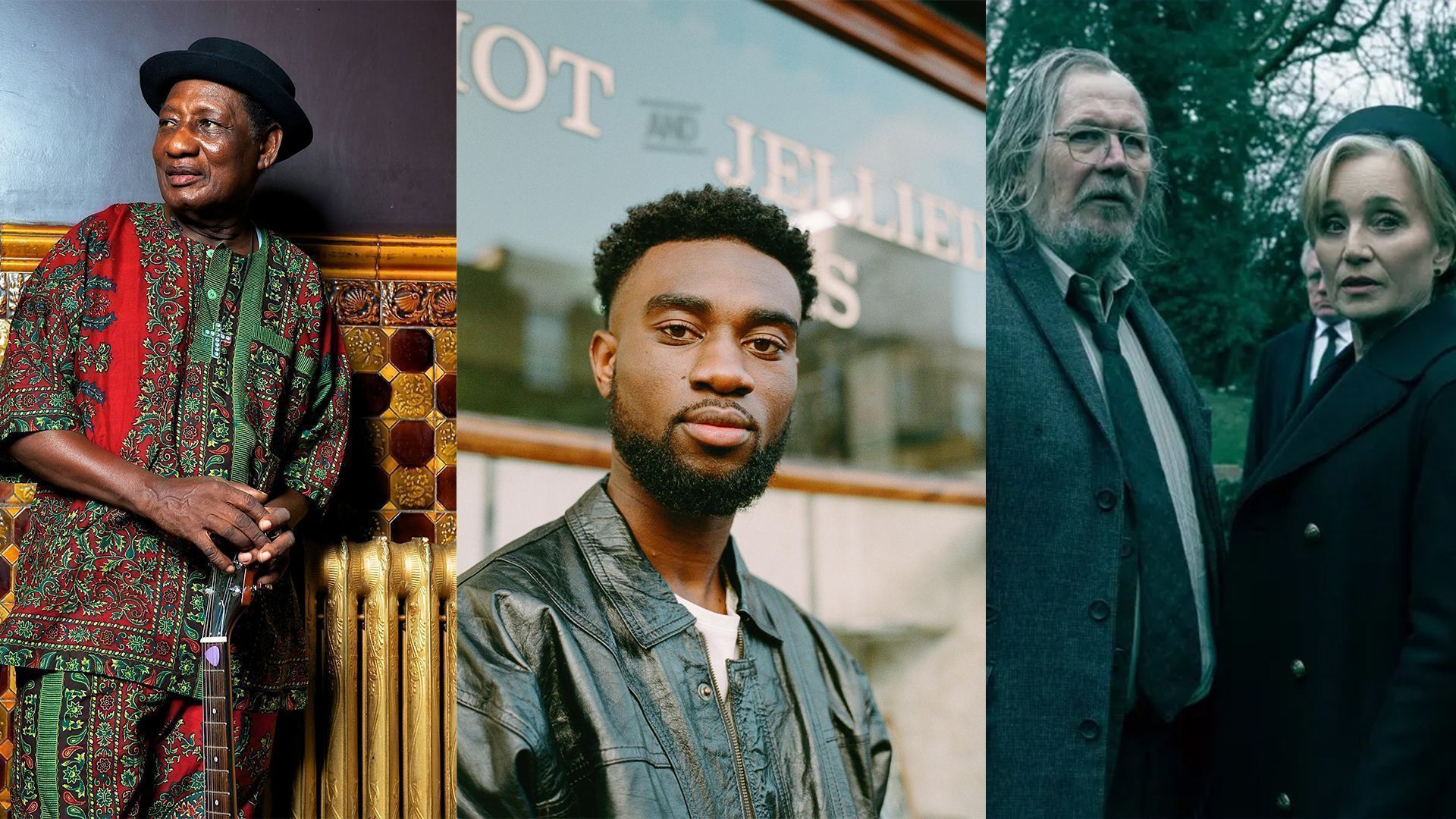
That is part of what makes the music selection in the sixth season of Slow Horses interesting for Ghanaian music lovers. The British spy thriller features Busker Flow by Kofi Stone and Love & Death by Ghanaian highlife legend Ebo Taylor in its first episode. One represents contemporary British hip-hop, while the other carries the unmistakable musical legacy of Ghanaian highlife and Afrobeat.
They are not two Ghanaian artists, however. Kofi Stone is a British rapper of Ghanaian heritage, while Ebo Taylor was born in Cape Coast, Ghana, and built a career that helped shape the country's highlife and Afrobeat traditions. That distinction makes their appearance in the same episode particularly interesting.
Kofi Stone: Ghanaian Heritage, British Hip-Hop
Kofi Stone has built his identity in British hip-hop through thoughtful lyricism, personal storytelling and a sound that sits comfortably between rap and more soulful musical influences.
His appearance on the Slow Horses soundtrack with Busker Flow puts his music in front of an audience that might not otherwise encounter his work. In an interview with Decider, actor Tom Brooke confirmed that he suggested Kofi Stone's music for his character, J.K. Coe, helping bring the track into the series.

For Ghanaian audiences, there is another layer to that story. The Ghanaian diaspora has long contributed to music scenes across the UK and beyond, building creative identities that reflect more than one cultural experience.
Kofi Stone's presence in a British television production is not, by itself, proof of a direct Ghanaian musical influence on the show's soundtrack. But his Ghanaian heritage forms part of the wider story of how Ghanaian identity travels through people, creativity and culture.
Ebo Taylor: A Ghanaian Sound With a Global Life
Few names carry the weight of Ebo Taylor in the history of Ghanaian music.
Born in Cape Coast in 1936, Taylor became one of the country's most influential guitarists, composers, arrangers and bandleaders. Across a career spanning more than six decades, he developed a distinctive sound that brought together highlife, jazz, funk and Afrobeat. His work helped define a musical era while continuing to find new audiences long after many of his recordings were first released.

His song Love & Death appears in the closing credits of the first episode of Slow Horses Season 6, according to published soundtrack listings.
The choice is significant because Taylor's music does not need to sound contemporary to feel relevant. The instrumentation, rhythms and arrangements carry their own character, shaped by a musical tradition that has influenced generations of listeners and musicians.
Taylor's international recognition also predates this television placement. His music has attracted international listeners through reissues, collaborations and sampling. His song Heaven, for example, was sampled by Usher for She Don't Know, featuring Ludacris, in 2010.
His appearance on the Slow Horses soundtrack is another point in that longer story: Ghanaian music continuing to find a life in places and contexts far removed from where it was created.
What This Means for Ghanaian Music
The interesting part of this story is not simply that Ghanaian music has appeared in an international television series. It is the different ways music can travel.
Sometimes it travels through a contemporary artist whose work reaches a new audience. Sometimes it is an older recording rediscovered by a music supervisor, filmmaker, producer or listener. Sometimes a song finds another life through sampling, a film placement or a streaming playlist.
These routes matter because music discovery is no longer limited to radio stations, record shops or local music scenes. A television scene can introduce a listener to an entire catalogue. A single placement can prompt someone to explore an artist's albums, collaborators and musical history.
For Ghana, the opportunity extends beyond individual songs. Highlife, Afrobeat and the country's many contemporary sounds offer a rich musical archive that can be introduced to international audiences through film, television, advertising, games and other forms of visual storytelling.
But that opportunity requires more than hoping that a music supervisor happens to find the right record.
It calls for organised music catalogues, clear licensing information, accessible contacts for rights holders and stronger relationships between Ghanaian musicians, publishers, labels, music supervisors and production companies. The easier it is to identify, clear and license a song, the easier it becomes for that music to find its way into new productions.
Beyond the Soundtrack
There is also a lesson in the contrast between Kofi Stone and Ebo Taylor.
One is a contemporary British rapper whose background connects him to Ghanaian heritage. The other is a Ghanaian musician whose decades of work helped shape the country's musical identity. Their sounds come from different contexts, yet both appear within the musical world of the same television episode.
That does not mean their careers or cultural identities are interchangeable. Rather, it shows how broad the conversation about Ghanaian music can be.
The story is not limited to Afrobeats or the latest Ghanaian hit. It includes the foundations laid by highlife musicians, the evolution of Afrobeat, the work of Ghanaian artists in the diaspora and the many ways these sounds intersect with music scenes around the world.
For a younger generation of Ghanaian musicians, producers and music entrepreneurs, there is a world of possibility in understanding that wider picture.
The next international music discovery might come from a new release, a decades-old recording or a sound that a filmmaker finds perfect for a scene.
Ghanaian Music Has More Stories to Tell
The appearance of Busker Flow and Love & Death in Slow Horses offers a timely opportunity to revisit two artists connected to Ghana in different ways and to think about where their music travels.
For Ebo Taylor, it is another reminder of the lasting life of a musical catalogue built over decades. For Kofi Stone, it is an opportunity for more listeners to discover an artist whose heritage connects to Ghana while his career sits within British hip-hop.
For Ghanaian music as a whole, the bigger question is how to turn these moments of discovery into lasting interest in the artists, the catalogues and the culture behind the sound.
Because the story of Ghanaian music is bigger than one genre, one generation or one moment of international attention.
Sometimes, all it takes is a song in the right scene to remind the world that there is much more to discover.
See the Slow Horses Spotify Soundtrack Playlist Here: